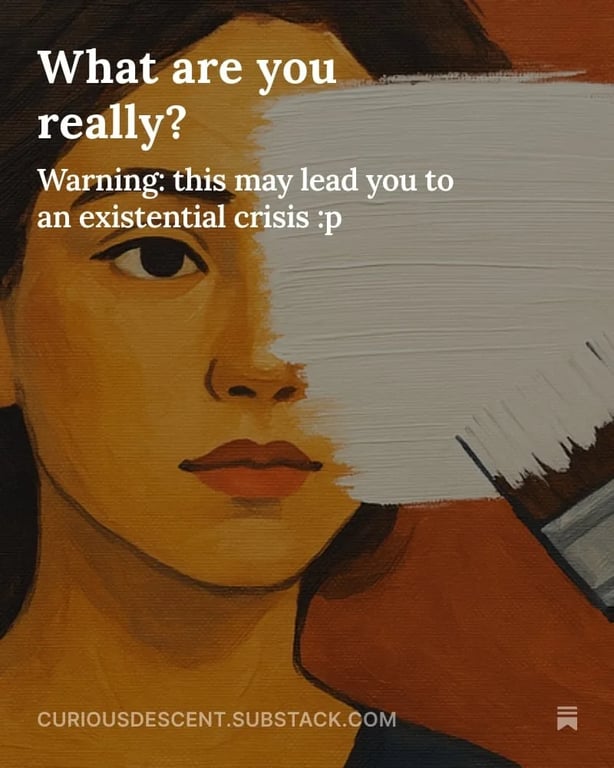
Recently, I watched a video of a guy showing off his finished canvas painting. It was a painting of a woman’s face - very detailed, very beautiful. And he grabbed a great big paintbrush, smothered it in white paint, and coated it on, until she was gone! He knew this would shock his audience, but he wanted to start painting afresh (or he wanted views).
But what struck me was why this moment was shocking. Throughout my life, and I assume it’s the same for the majority of people, you would never think to consciously erase something you created. It took time, and you want to leave evidence of your efforts.
But why must you leave evidence?
The Impermanence of Creation
We want permanence because we think it proves that we existed - that the self can outlast time. But the self is as fleeting as the art it makes.
Moments in time slip away constantly. Once you notice it, it’s already gone!
Yet there seems to be a desire in humans to hold on.
To say:
I made this, I plant my flag in the ground, I carve my name in the wall.
I was here!
How many of these desires ever come to fruition? It’s estimated that 100-120 billion people have ever lived - how many are remembered?
Today we remember Elvis, Leonardo Da Vinci, Max Planck and their impact on culture will continue to cascade through time up until a point - but will future humans talk about them in 500 years, will their memory be as vibrant? Which artists of today will last the test of time?
In 5 billion years the Earth will be gone, swallowed by the sun, and none of these creations will physically exist.
Humans know this, they know they will fade, yet we still cling to permanence.
My theory is that we have forgotten what death is, so we are absolutely terrified to let life go.
The Acceptance of Transience
What is so revealing about what has lasted, up until now, is that it always tends to be tied, not to one human being, but a group of people. These people would have felt very deeply, a need to create for creation’s sake.
This is less about clinging to the moment, and more about embracing it - decorating life’s next moments or bringing heaven to Earth.
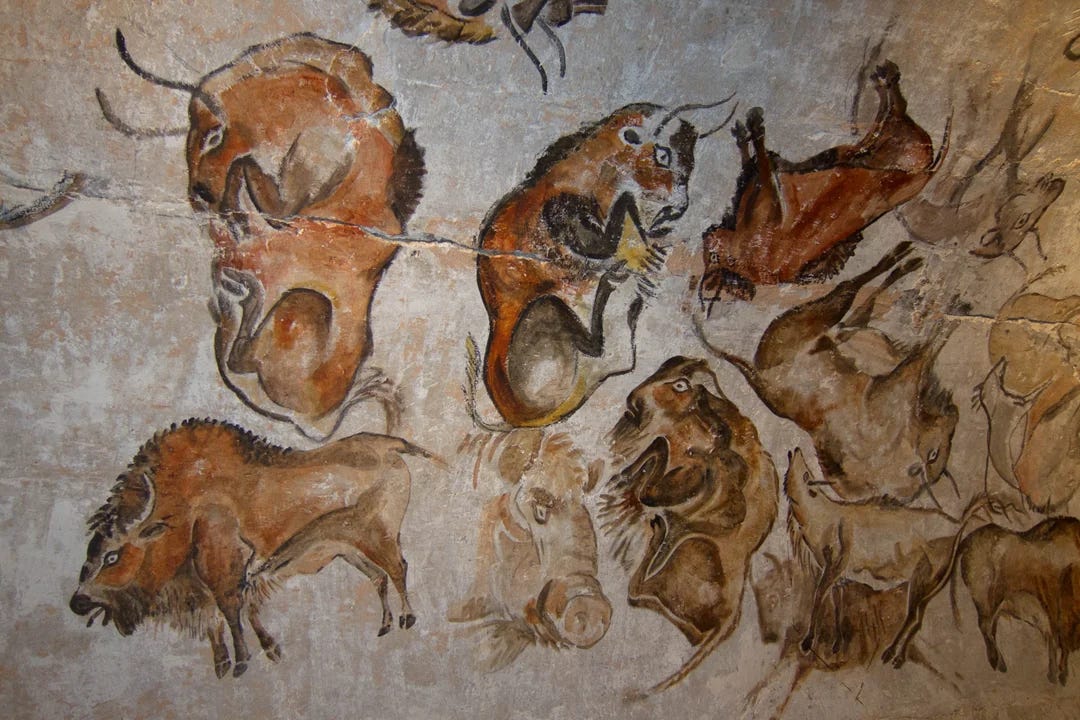
The Caves of Lascaux and Altamira (c. 15,000 BCE) - communities of hunter-gatherers painted deep in caves, using art as prayer, to express the cycle of life and death.
Göbekli Tepe (c. 9,000 BCE, Turkey) - built by pre-agricultural people, it is thought that this was the first monument to commune with the sacred.

The Pyramids of Egypt (c. 2,500 BCE) - tens of thousands of anonymous workers, architects, and craftsmen worked together to build enormous structures that are now remembered for an entire civilisation’s expression of cosmic harmony.

For these civilizations, death wasn’t final but a transformation, often into another form or stage of existence. Their decision to put joy into the life they had, rather than cling to permanence, created something so monumental, we still see it today.
A Lesson in Impermanence
A vivid and surprising practice by Tibetan Buddhist monks is to arrange intricate art from colourful sand, forming sand mandalas - only to brush it all away once it’s done!
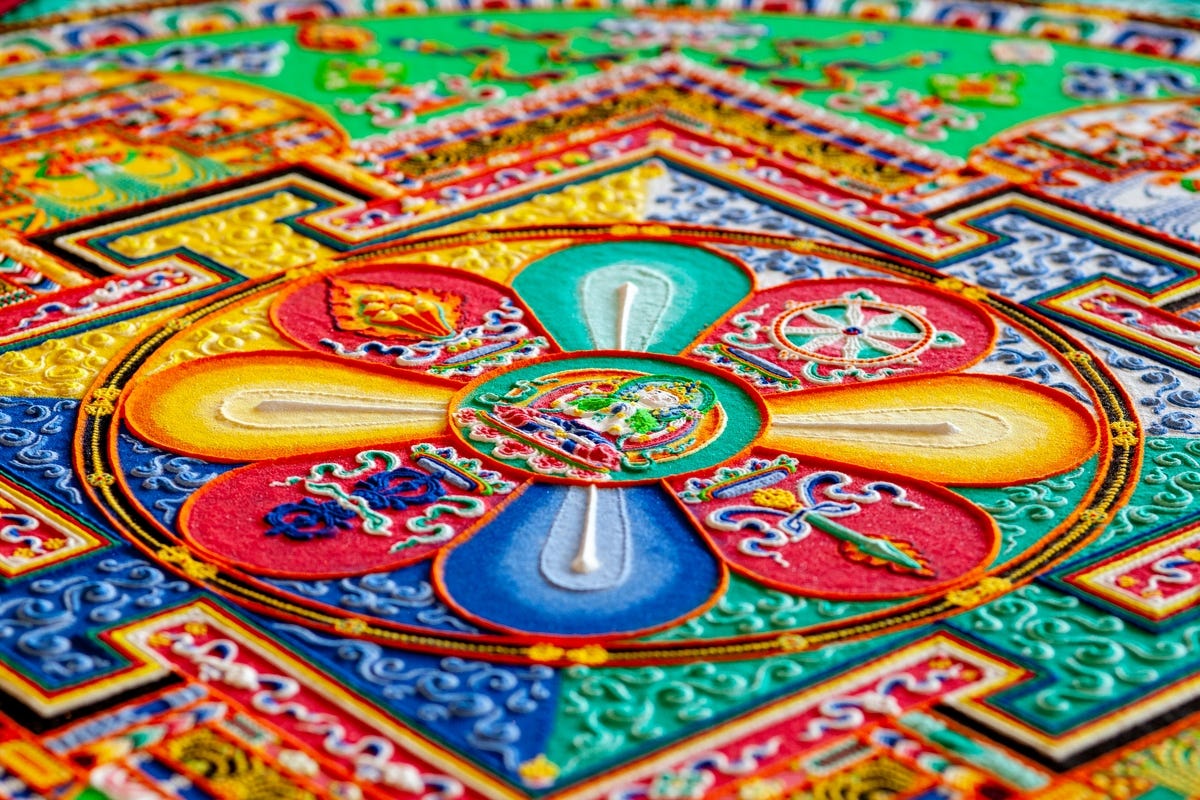
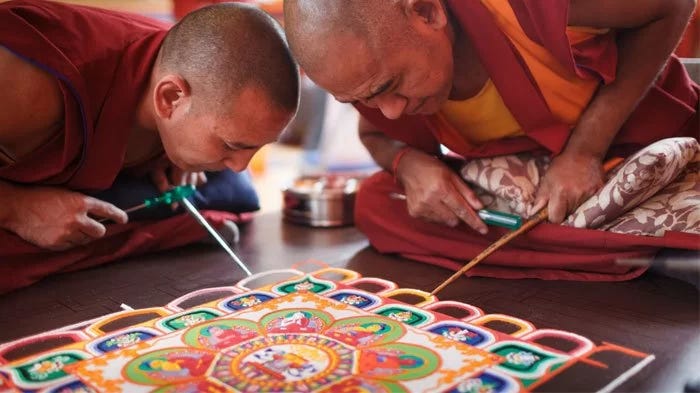
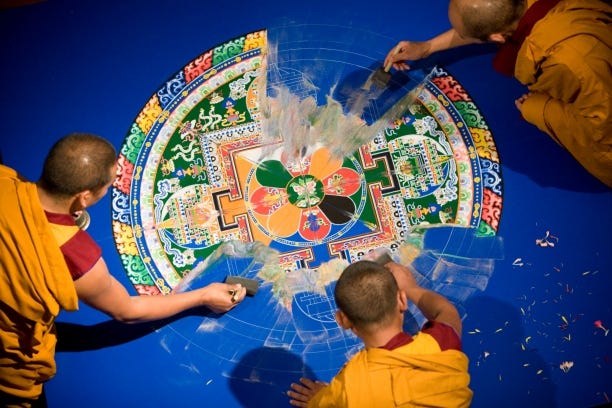
It could take weeks to form these beautiful pieces, but the monks use this lesson to remind themselves about the true impermanence of life and their self.
Stripping Away Everything
How would you describe yourself? Funny, confident, shy, empathetic, creative, ambitious, patient, stubborn, kind, driven, curious, adaptable - a problem solver, a leader, a dreamer, a perfectionist, an overthinker. Do you describe yourself by your job or your hobbies or the foods you like?
I would say: I am an app developer, I travel around Asia a lot, I love spicy food, I like to dance. I’m ambitious and I like to solve problems - all these things are me, right?
Imagine you’re in a vast, dark cube. There’s no light, no sound, no scent, nothing to touch or taste. You know nothing except your existence.
There are no problems to solve, water to drink or food to try, people to talk to, art to see or ideas to explore. What are you now?
The Fragility of Identity
I see, on the internet and in its spill into real life, everyone feels the need to categorise themselves. I have this attachment style, I am this personality, I am part of this community. I am this, this, and that.
None of these labels are permanent (unless you force them to be).
The biggest awakening to this idea for myself: I was very quiet growing up and as I reached adulthood I found out that there is an art to conversation, and confidence is a skill that can be learnt like any other. You can go from not talking, to speaking to an audience hanging on your every word.
Everything is a skill, and not having it or having it are just two states that you can move between - you are not stuck in either.
This is because it is an added layer on top of you.
Moments change, your identity changes, there is nothing in the universe that is fixed or permanent. Everything arises - and then passes away.
So…
What are you?
The idea of no fixed essence within you has been expressed across the millennia.
In Buddhism there is the Anatta or Śūnyatā meaning no fixed self and all is interdependent. In Hinduism there is the Advaita meaning the self and universe are one. In Taoism the Dao or the Wu Wei is the letting go of self into the Way. For the mystics in Christianity there is Kenosis, the emptying of the self for divine union. In Sufism the Fanā’ is the annihilation of ego. In Greek thought there is the Logos - the underlying unity beneath all change. And now in modern philosophy there is the Phenomenological Being Self as process, not entity.
Your existence is you, and that is all.