Daeda Wishlist
Increase repeat sales - customers return to buy saved products.
Tech Stack
Links
About
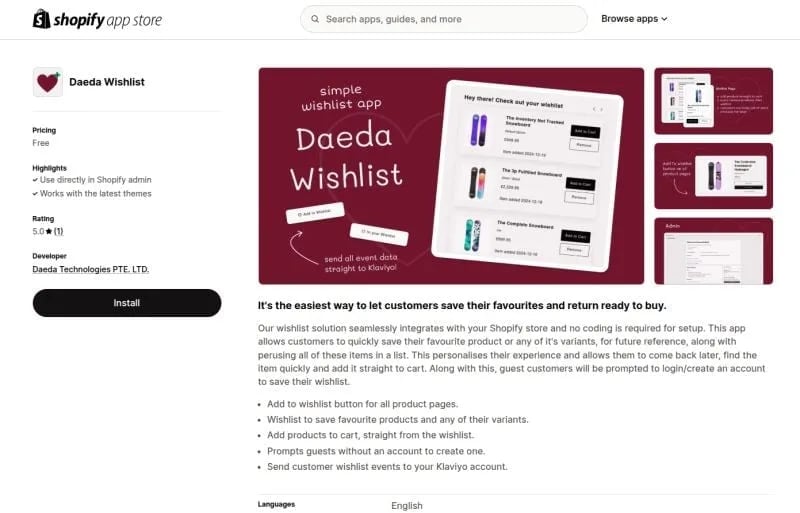
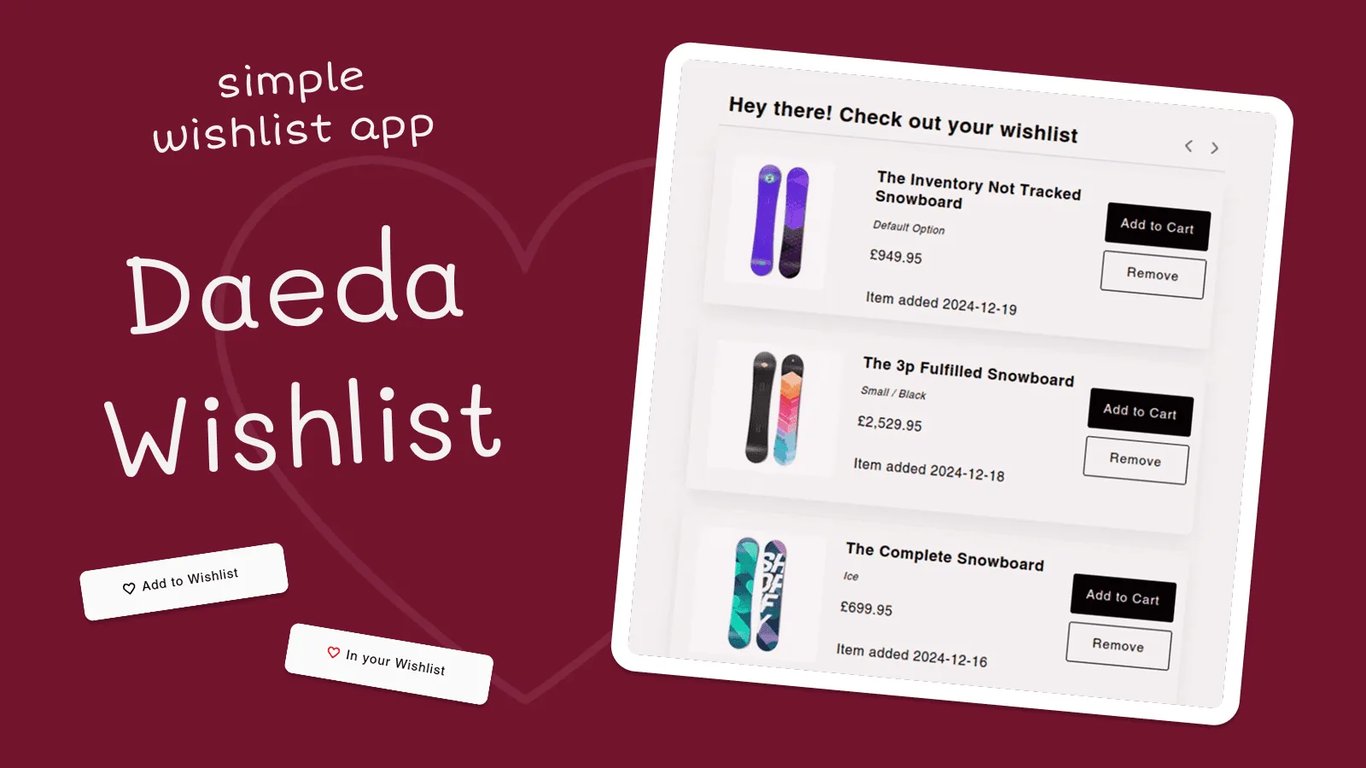
Our wishlist app integrates seamlessly with your store. Customers can save favourite products or variants for later, view all saved items in one place, and add them to cart when ready. Shoppers can use a floating button with a side drawer or a navigation link with a dedicated page, and you can customise button and icon colours to match your store's branding. Guest shoppers are prompted to log in or create an account to keep their wishlist, helping you capture more sign-ups and repeat sales.
Daeda Wishlist was a Shopify app I built solo over three months in Chiang Mai, then maintained for fourteen more before shutting it down. Customers could save products or variants for later via a floating drawer or a dedicated wishlist page, with merchant-controlled colours, layout, and guest-to-account prompts. The full stack was Remix, Prisma, Supabase Postgres, Polaris for admin UI, Liquid for the storefront extension, and Shopify's OAuth and app extensions.
It launched on the Shopify App Store in January 2025. I dropped the £1/month price to free in April after seeing setup-funnel friction, and traffic to the listing jumped 62% the following month. In August I rebuilt the merchant onboarding from sixteen steps down to a single flow because uninstalls were spiking during setup. By November the first proper active merchants had wired the wishlist into their live stores, and the app eventually reached 103 installs across all time.
I took it down in April 2026. Three reasons. The app was free, so it generated zero revenue while costing £10 per month in Supabase hosting. The Shopify ecosystem is difficult to maintain long-term: Liquid theme work has terrible hot reload, the docs are inconsistent, and Remix as a framework added its own friction. And focus mattered more than habit. Maintaining a stagnant product was draining attention from things with growth potential.
This was my first end-to-end full-stack ship. At the start I did not believe I would finish. I did, and the marketplace launch made me feel like I had truly accomplished a hard goal.
Pricing
Free
- ✓ Wishlist button on product pages
- ✓ Save favourites and variants
- ✓ Add items to cart from wishlist
- ✓ Prompt guests to create an account
- ✓ Customise button + heart colours
- ✓ Choose side drawer or page layout
Build Timeline
First Lines of Code
Set up Remix, Prisma, Supabase, and started learning the Shopify API.
Submitted to Shopify App Store
After 3 months of building, submitted for review.
Approved & Live
App went live on the Shopify App Store.
First Review
Got a review on the App Store.
Dropped the $1/month Price to Free
Removed the premium tier - 62% increase in Shopify App Store traffic the following month.
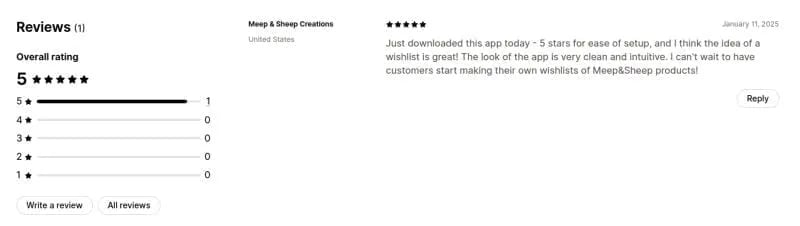
Shopify Reviews Purge
Shopify archived reviews from inactive stores - lost the app's only 5-star review.
Rebuilt the Setup Flow
Cut the merchant setup from 16 steps to a streamlined flow after seeing uninstalls spike during onboarding.
First Proper Active Merchant Use
Merchants added the wishlist to their live stores.
Decision to Sunset
Taking the app down to cut costs and focus on other projects.
Frequently Asked Questions
What was the tech stack for Daeda Wishlist?
TypeScript, Node.js, Remix (Shopify's recommended framework), React for the merchant admin UI, Liquid for the storefront widget, Polaris for admin UI components, Prisma ORM with PostgreSQL on Supabase, and the Shopify APIs for OAuth, app extensions, and storefront integration.
Why was Daeda Wishlist taken down?
Three reasons: the app was free so it generated no revenue while costing £10/month in database hosting; the Shopify ecosystem is complex to maintain long-term; and focus - maintaining a stagnant product takes energy away from projects with more potential.
How many people used Daeda Wishlist?
The app reached 103 total installs on the Shopify App Store, with 24 still active at sunset. At least 2 merchants actively added the wishlist to their live stores, and the app received its first review.
Related Blog Posts
Read more about how I built this project and what I learned along the way
Discussion & Feedback
Have questions about this project? Built something similar? Share your thoughts!
(Requires GitHub account to comment)
Related Projects
Daeda Sheets Sync
Daily sales metrics to Google Sheets - including zero-sales days for a complete history. Syncs Shopify store stats on a set schedule, removing the need for dashboards or manual exports. Features automated data movement, shared visibility for non-technical teams, and faster analysis and check-ins.
Daeda Command Center
The command center for running Daeda - one internal app where every marketing and business signal lives in one place and the AI has full context. It grew out of a deliberate choice to build an internal OS instead of buying tools, and it replaced a stack of scattered docs, spreadsheets and subscriptions. ## How It Works The loop is capture, file, surface, decide, express, and each area owns one stage. Scheduled fetchers pull from search consoles, site and product analytics, page-speed, CRM, video and the forums, each writing to a single structured store. Every room is a view over that one store. ## The Rooms - **Overview:** the morning read - top operating metrics across search, traffic, answer-engine visibility, demos, content and pipeline, with a what-changed feed and a needs-attention list. - **Work:** the desk - a weekly block plan, a worklog of done work, and one ranked next-best-work queue. - **SEO:** a search operating dashboard - performance, health, growth and tracking on live search-console data. - **AEO:** answer-engine visibility - share of voice, AI citations, the prompts we get cited in, and a recommendation queue. - **Socials:** community listening and video tracking, powered by Community Radar. - **Blog:** the writing room - a content pipeline and an editor that writes straight to the real markdown, previewed against the live stylesheet.
Auto Associations Pro
I helped develop this HubSpot app that automatically creates associations between CRM records based on custom rules. We designed it to eliminate manual linking and reduce data fragmentation. Our custom rules define logic like 'associate all Contacts from Companies to Deals'.