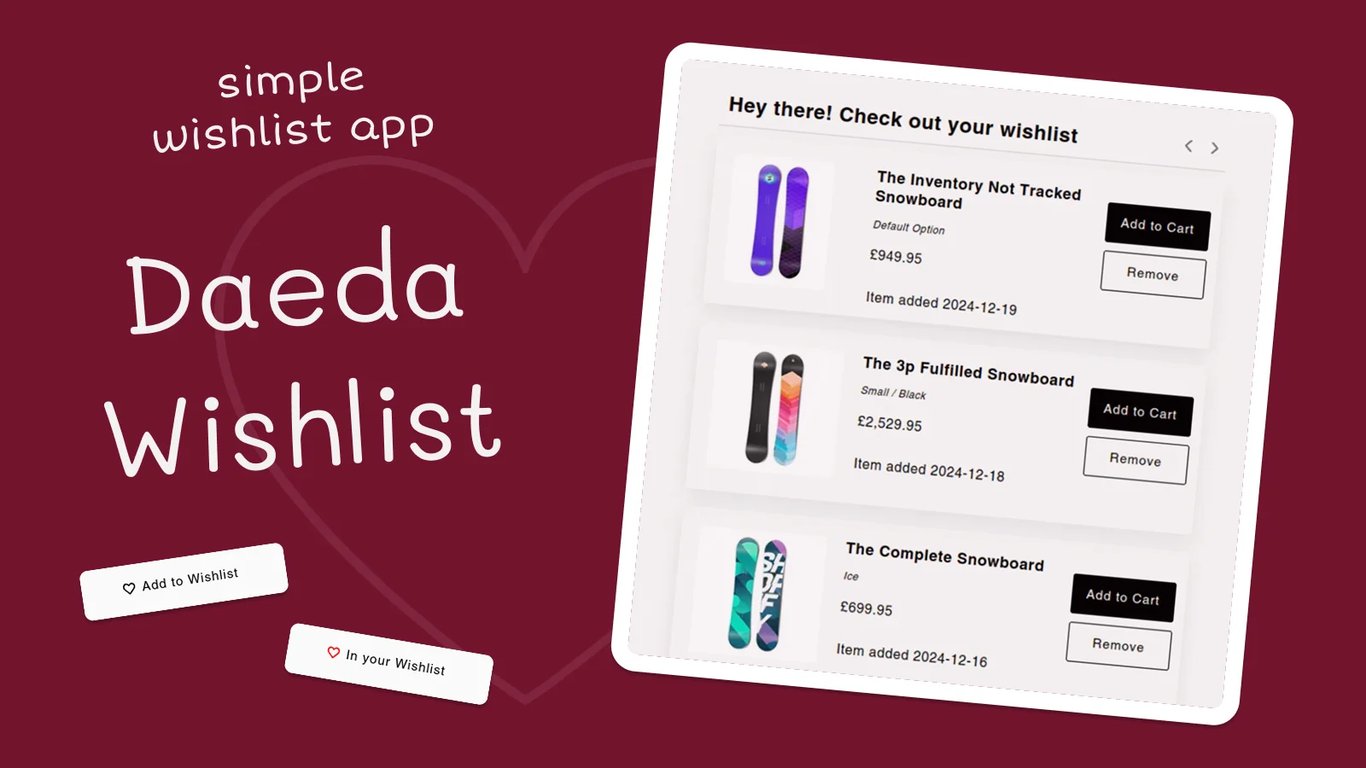
Daeda Wishlist: What Building My First Shopify App Actually Looked Like
The full story of building a Shopify wishlist app solo in Chiang Mai, getting real merchants to use it, and why I took it down 17 months later.
Build Timeline
First Lines of Code
Set up Remix, Prisma, Supabase, and started learning the Shopify API.
Submitted to Shopify App Store
After 3 months of building, submitted for review.
Approved & Live
App went live on the Shopify App Store.
First Review
Got a review on the App Store.
Dropped the $1/month Price to Free
Removed the premium tier — 62% increase in Shopify App Store traffic the following month.
Shopify Reviews Purge
Shopify archived reviews from inactive stores — lost the app's only 5-star review.
Rebuilt the Setup Flow
Cut the merchant setup from 16 steps to a streamlined flow after seeing uninstalls spike during onboarding.
First Proper Active Merchant Use
Merchants added the wishlist to their live stores.
Decision to Sunset
Taking the app down to cut costs and focus on other projects.
Key Metrics
| Metric | Value |
|---|---|
| Total Installs | 103 |
| Project Duration | 17 months |
| Build Time | 3 months |
| Infrastructure Cost | ~£180 |
| Revenue | £0 (free app) |
At the end of 2024, Jack and I had just got married. I’d dropped out of uni, he’d left his job. We packed up and left Manchester, England - and in September we were off to Chiang Mai, Thailand. This was the beginning of my founder journey.
The Idea
I had started building a chrome extension for transferring music between platforms but found their internal APIs eventually too much of an unfocused time waste to tackle. My husband had already decided he would focus on a platform (HubSpot) and I was feeling the time ticking down, so I chose Shopify because I’d heard about it - I have no cool reasons. I needed to build a real product - something that actual people would install and use, since focus is the key to success. I went with a wishlist app as I thought it would be an easy app to get started with, get onto the platform quick. There were already pretty extensive wishlist apps on the marketplace so this was more about learning the ecosystem before I built something really useful afterwards.
The Build
It took me three months from idea to submitting for review. Every day was building, getting stuck, solving bugs. I learnt Remix from scratch and I didn’t love it - it felt unnecessarily structured for what I was trying to do, but it’s what Shopify recommended so I stuck with it. Prisma made the database work clean and type-safe, and Supabase was the quickest way to get a production PostgreSQL database running. Working with Liquid for the storefront widget was painfully slow - the hot reload situation is dire.
AI was starting to take off around this time, but I was still very much writing all the code myself. Looking back it feels impossibly slow compared to how fast I can build now, but it meant I understood every line.
The stack ended up being:
- Frontend (merchant admin): React + Remix + Polaris
- Storefront widget: Shopify Liquid + vanilla JS
- Backend: Node.js + TypeScript
- Database: PostgreSQL on Supabase via Prisma ORM
- APIs: Shopify OAuth, App Bridge, Storefront API
What It Did
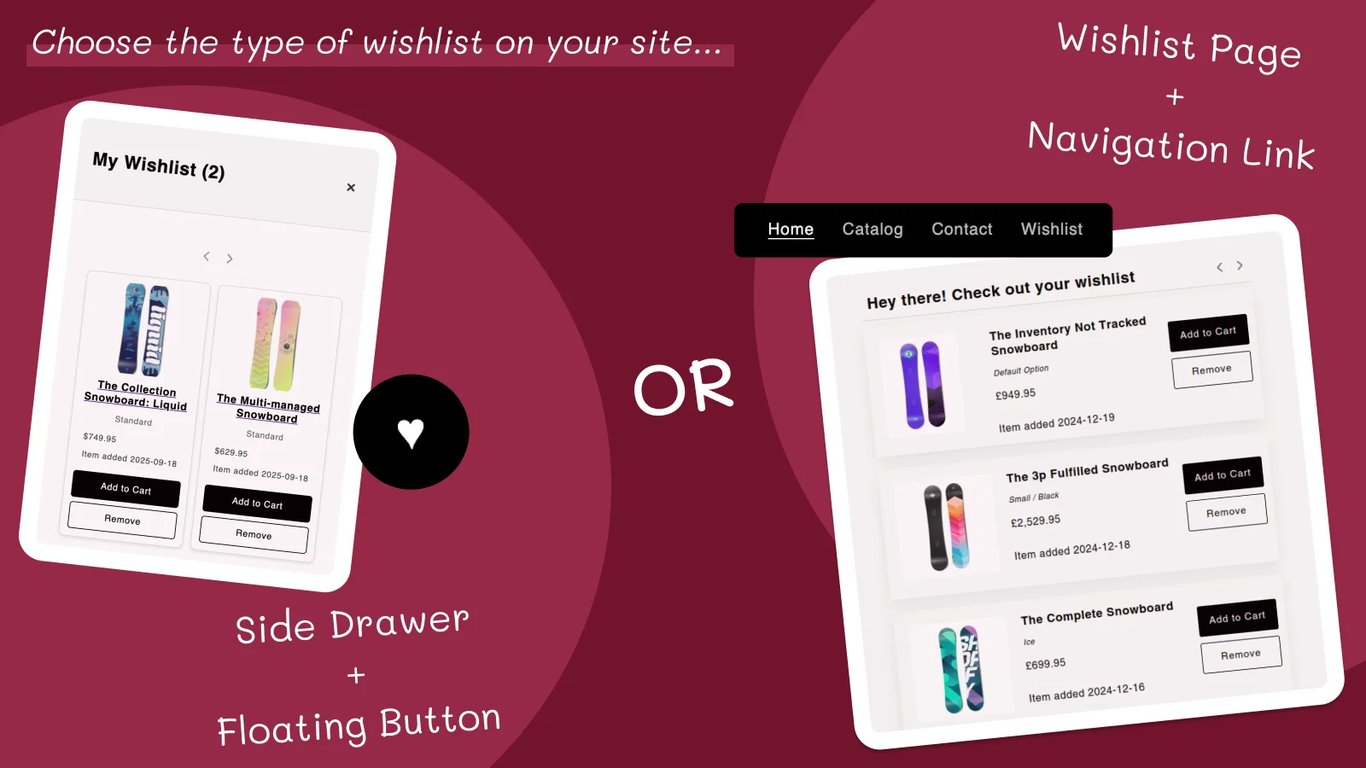
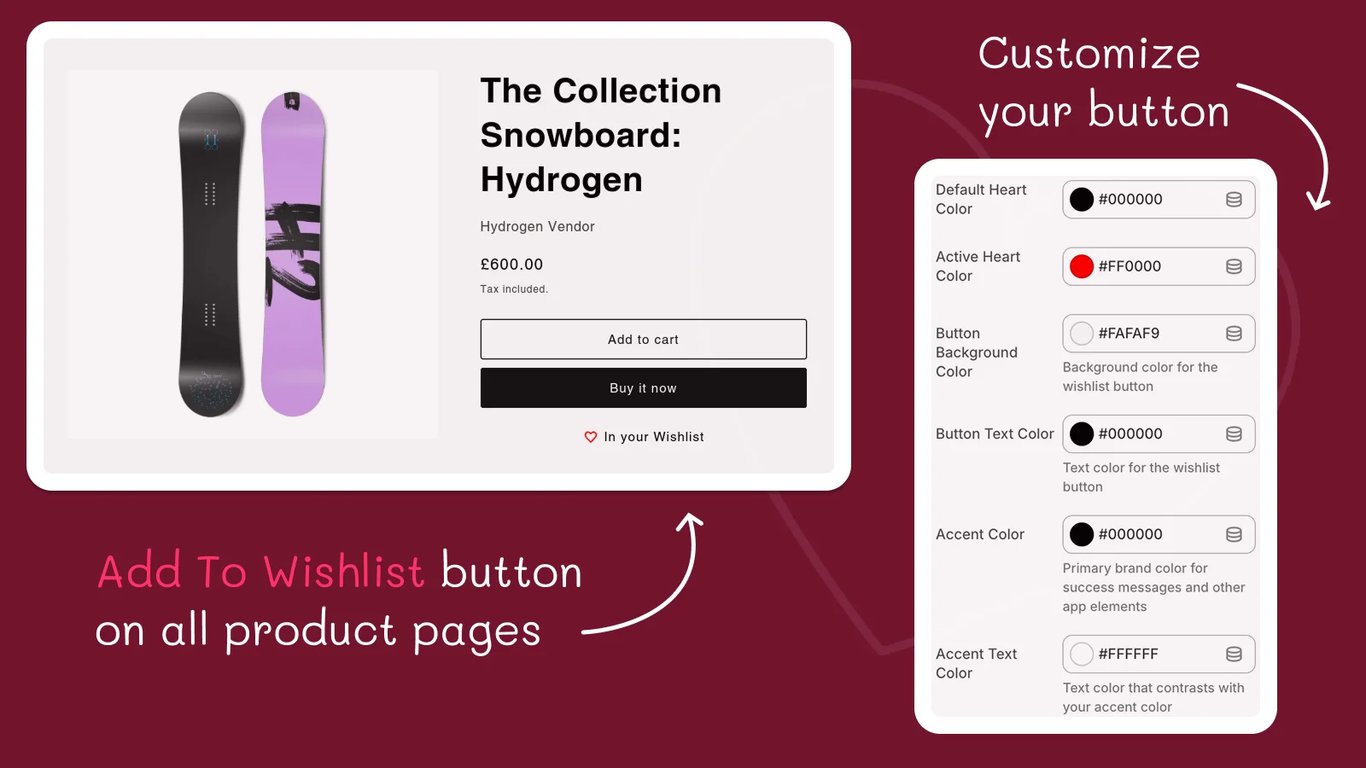
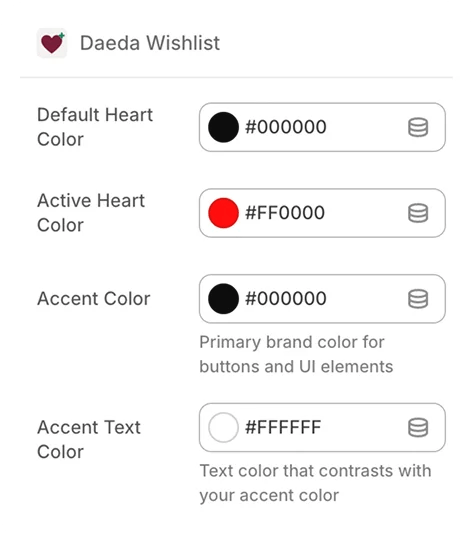
Customers could save products - or specific variants - to a wishlist and come back to buy them later. Merchants got two layout options: a floating heart button with a side drawer, or a dedicated wishlist page with a navigation link. Everything was customisable - button colours, heart colours, accent colours - so it could match any store’s branding.
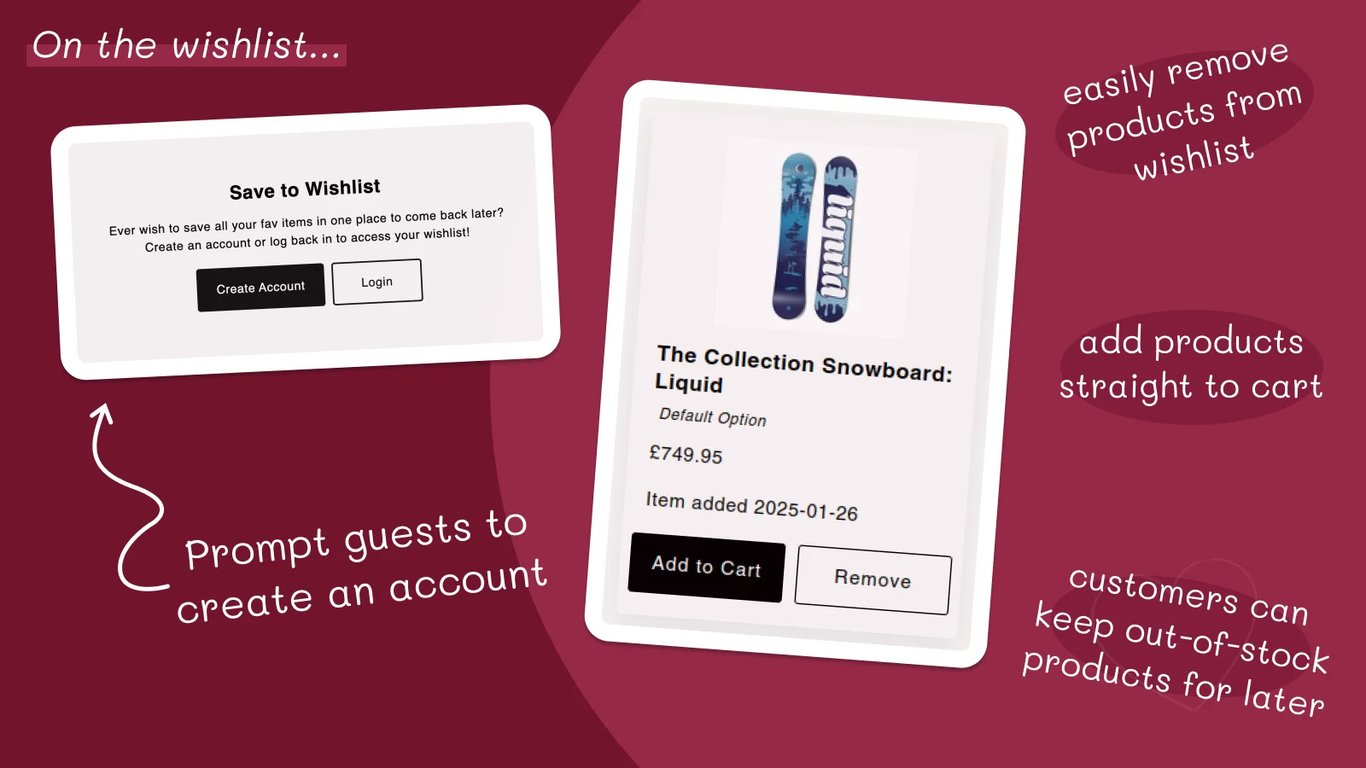
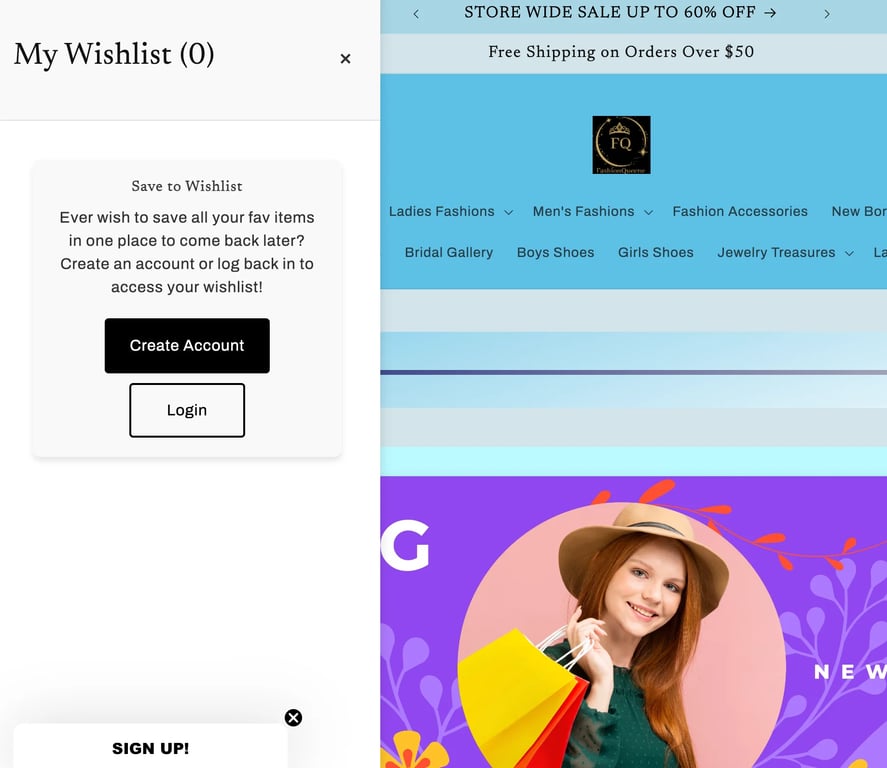
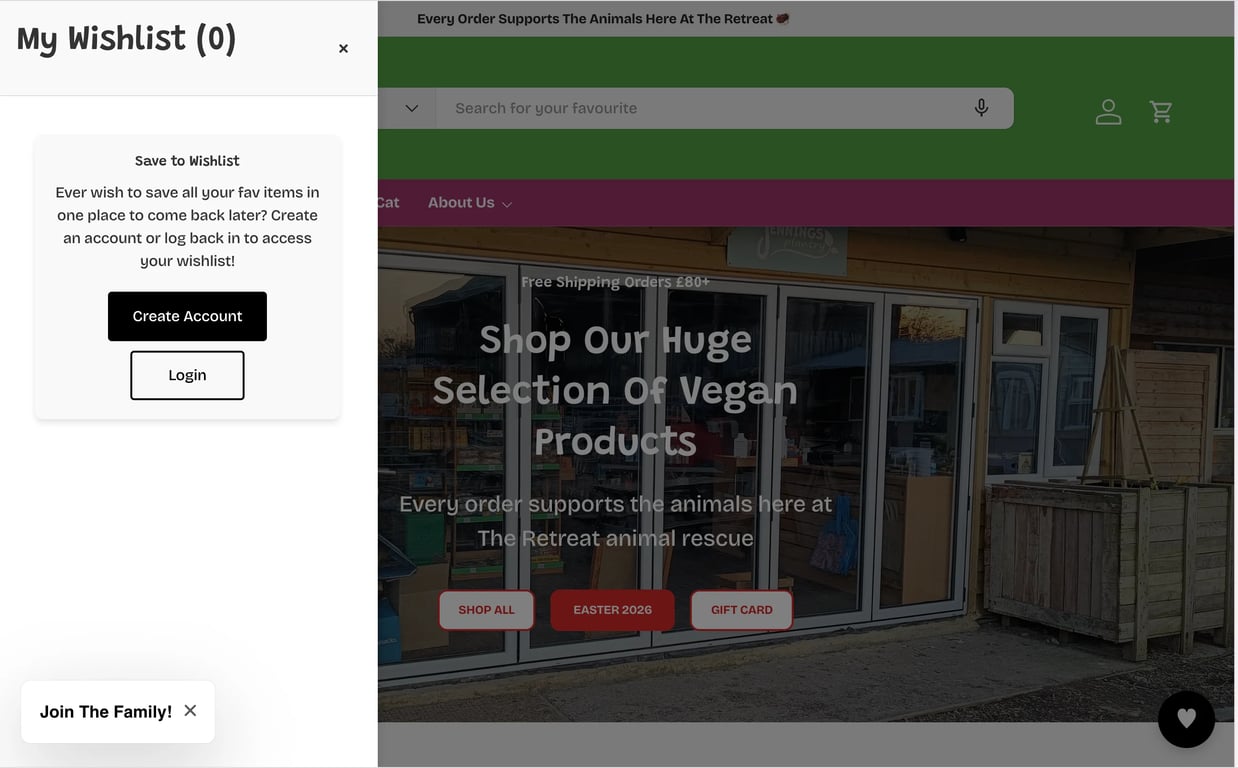
Guest shoppers were prompted to create an account or log in to access their wishlist, so merchants could capture more sign-ups.
Merchant Setup
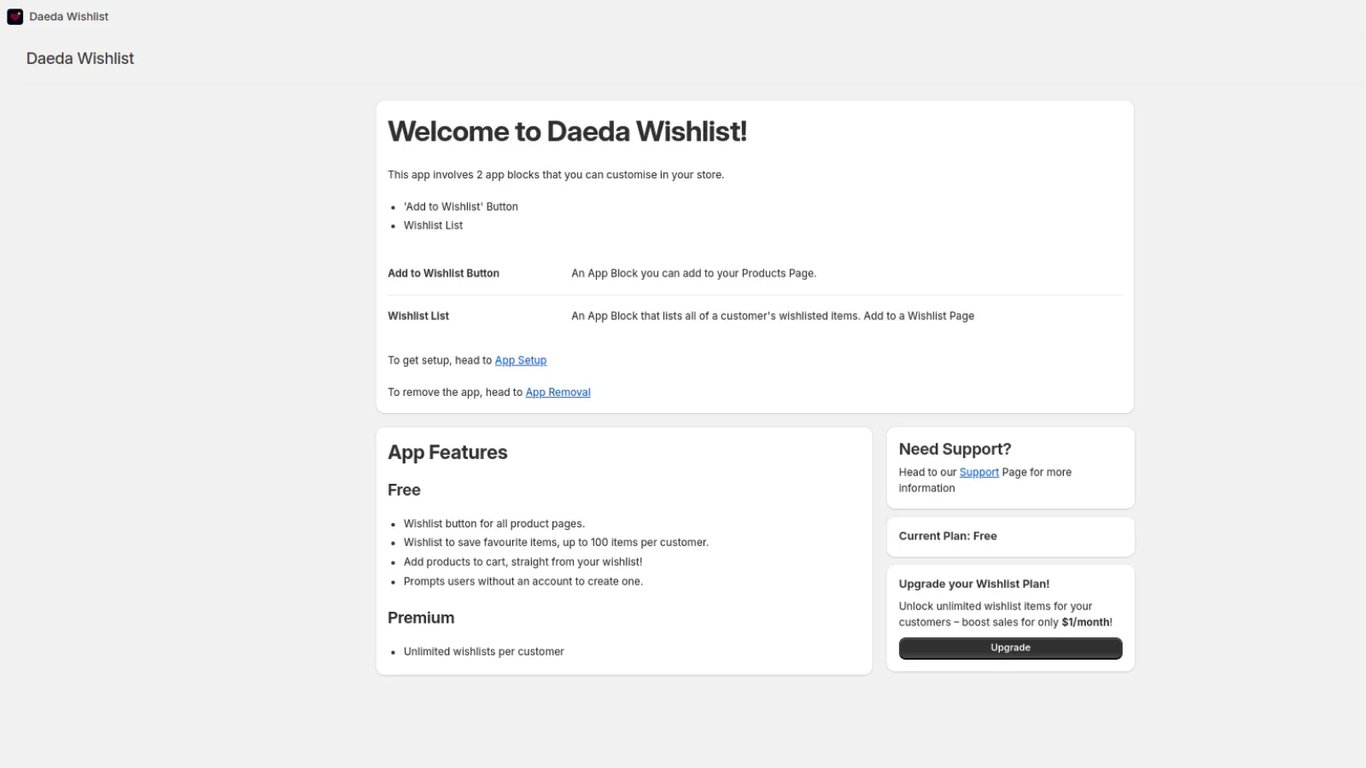
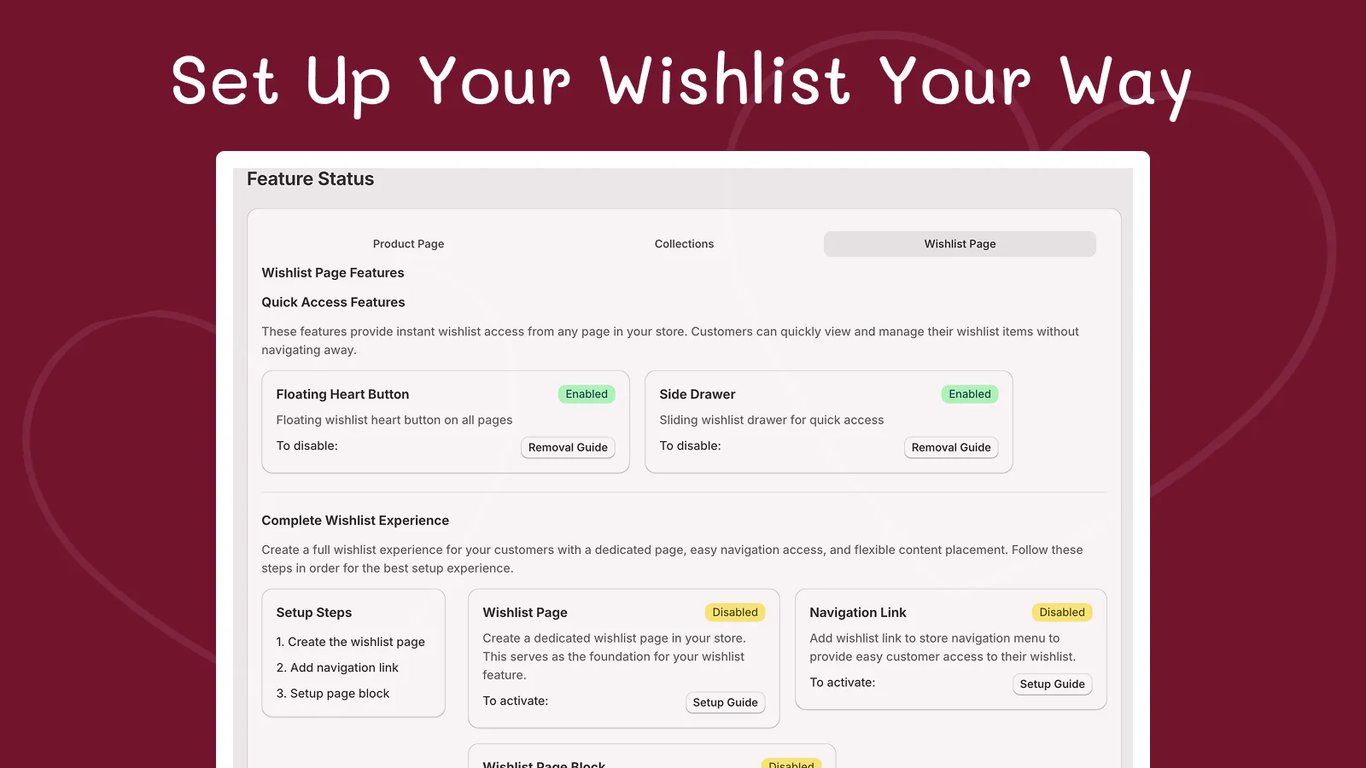
Merchants could configure everything from the admin dashboard - enable the floating heart button, side drawer, or set up a dedicated wishlist page with step-by-step guides.
Technical Challenges
Shopify’s Ecosystem Complexity
Building for Shopify means dealing with app extensions, theme compatibility, and Liquid templating — and worst of all Remix (though to be fair I could’ve used a different framework, but Remix is what Shopify recommended). You’re building something that has to integrate seamlessly into someone else’s entire platform. I’d never built anything this complex before - looking back a wishlist app is pretty straightforward, but dealing with Shopify makes it a never ending battle.
Theme Compatibility
The wishlist needed to work across different Shopify themes. Some themes handle app blocks differently, and some can’t even access app blocks at all - they’re stuck on the legacy ScriptTag API, where apps just inject remote JavaScript into every page load.
The Launch
After 3 months of building, I submitted the app to the Shopify App Store. The review process took a couple of weeks — Shopify checks the code, the UX, and makes sure the app meets their standards. I was super nervous the whole time that something would break. Getting approved felt like a real milestone.
Then the installs started trickling in.
Iterating on the Listing
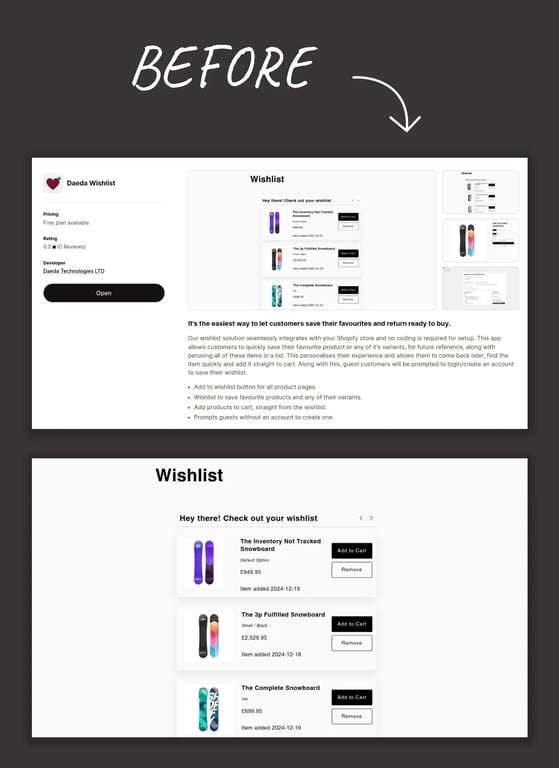
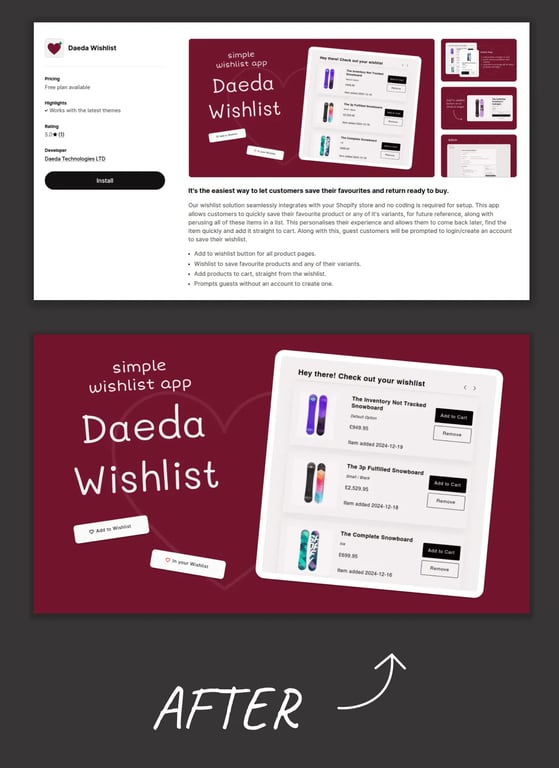
The app listing went through its own evolution. Here’s how it looked before and after I redesigned the screenshots and branding:
The Milestones
The First Review
I started posting lots on Threads social media about my app, about store fixes I was helping with on the shopify forums and following lots of small beginner merchants that I thought might be interested in my app. I then cold DMed some and got a lovely response from Meep & Sheep Creations store owner who installed my app and set it up pretty much immediately.
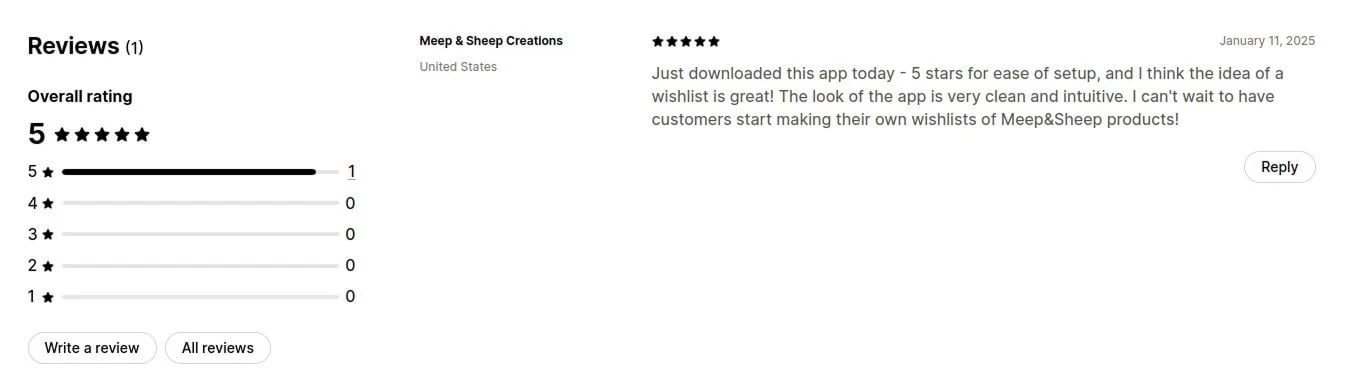
A 5-star review from Meep & Sheep Creations:
Just downloaded this app today - 5 stars for ease of setup, and I think the idea of a wishlist is great! The look of the app is very clean and intuitive. I can’t wait to have customers start making their own wishlists of Meep&Sheep products!
Over time, two merchants actually put Daeda Wishlist on their live stores. It was kind of crazy to think real stores, selling real products, had my code running on them.
Cool stat: one user even saved 12 items to their wishlist.
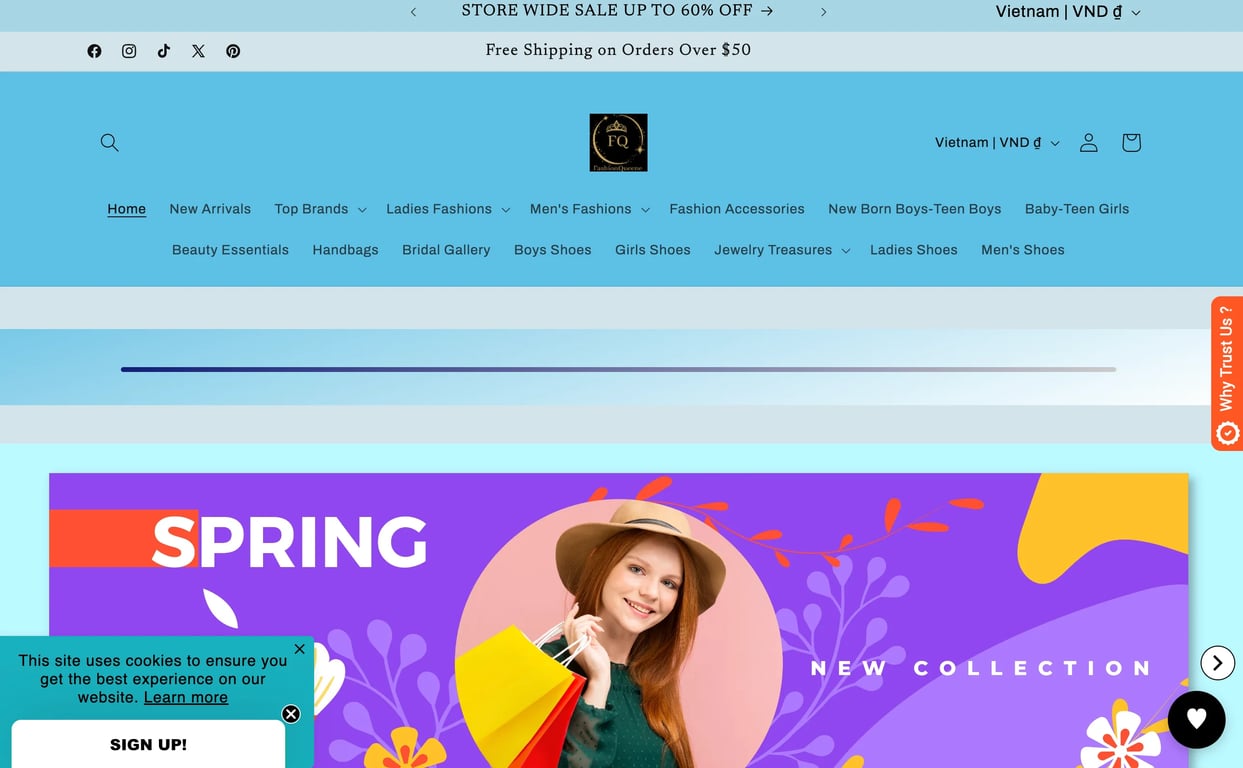
Merchant #1: A Fashion Store
A fashion store selling clothing and accessories integrated the wishlist with their custom theme. The floating heart button, the side drawer, the guest prompts - all live on a real store.
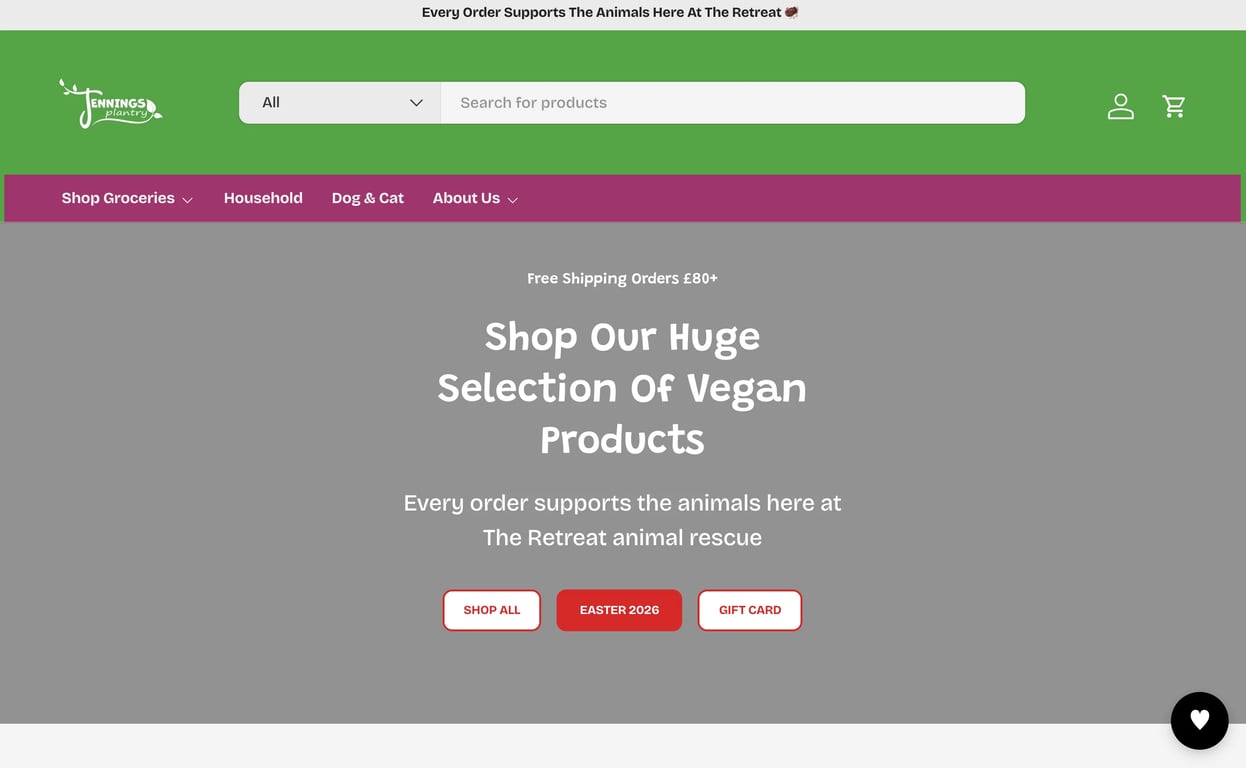
Merchant #2: A Vegan Products Store
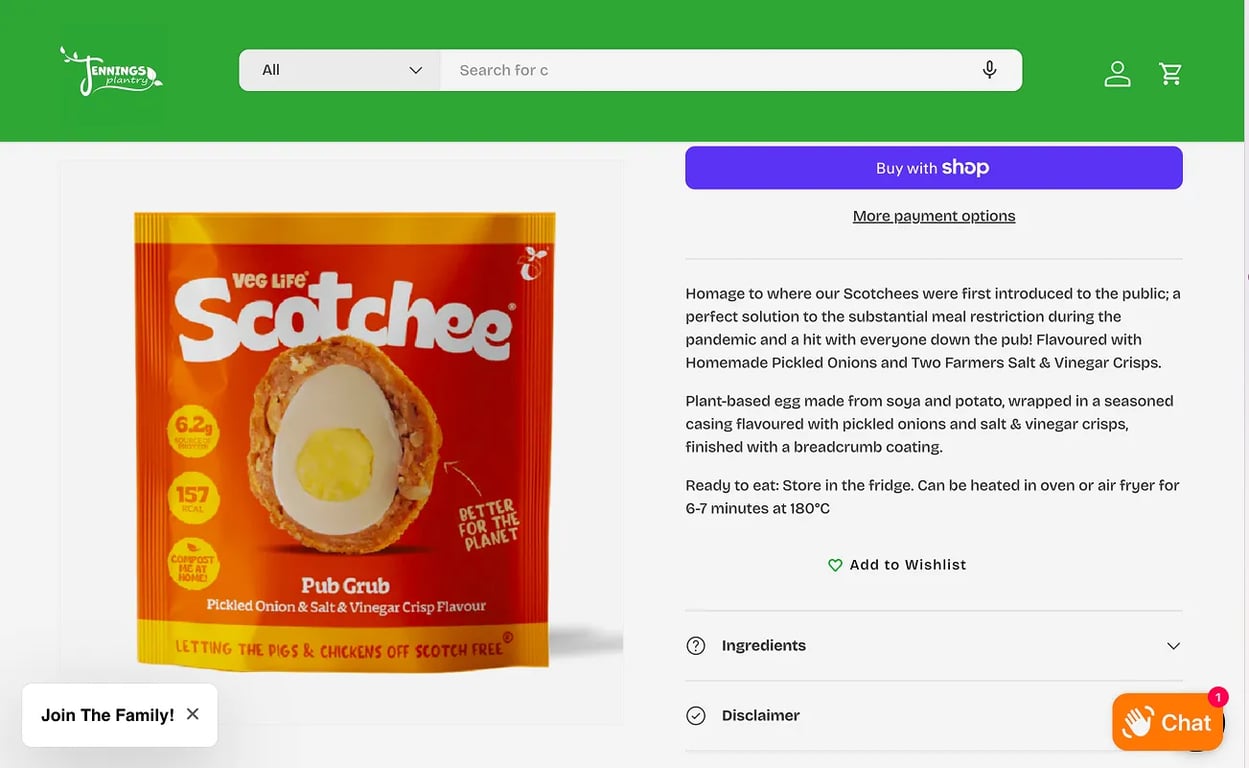
An animal rescue charity selling vegan groceries and household products. They added the wishlist to help customers save products for later.
Going Free
When I first listed Daeda Wishlist, it had a $1/month premium tier. The thinking was simple - cover hosting costs, validate that people would pay for it. But installs were slow, and I started wondering how much of that was the price tag scaring people off on a no-name app with zero reviews.
In April 2025 I removed the paid tier entirely and made the whole app free. The effect was immediate - Shopify App Store traffic jumped 62% in the month after. More people were finding it, more people were installing it. The problem was, free meant zero revenue while still paying £10/month to keep Supabase running. It proved the demand friction was real, but it also locked me into a model where growth actually cost me more money.
The Reviews Wipe
As soon as you start building on Shopify or even talking about it online, the spam starts. Emails from people offering to install your app on hundreds of fake stores and generate reviews. It’s constant, and clearly a lot of developers were paying for it - because in May 2025, Shopify announced they were archiving “a significant number of outdated, unhelpful, and untrusted reviews” to combat review farming. By July 2025 they rolled out an automated system: any review left by a store that was on a trial, discounted plan, or no longer active would be archived and hidden from your rating.
Estimates put the total at over 100,000 reviews archived across the platform. Legacy apps with years of accumulated reviews were hit hardest - some reportedly losing 55–70% overnight.
The intention was good. But it also caught legitimate reviews from real merchants who had simply closed their stores. My only review - the 5-star one from Meep & Sheep Creations - got wiped because their store had shut down a couple of months earlier. Back to zero reviews on a free app with no marketing budget. A sad day.
Rebuilding the Setup Flow
By mid-2025 I had a different problem: people were installing the app and then uninstalling almost immediately. Their feedback was pretty clear: the setup process was 16 steps long. Merchants would open the app, see this wall of configuration they had to get through before anything worked, and just bounce.
Around August 2025 I rebuilt the entire onboarding from scratch. The goal was to get merchants to a working wishlist on their store as fast as possible, with customisation as a second step rather than a gate. It was one of those changes where the before and after felt obvious in hindsight - of course nobody wants to click through 16 screens before they even see the product working.
I recorded a full demo after the revamp - here’s the streamlined setup in action:
The Shopify Ecosystem
Beyond the technical side, the culture around Shopify wore me down. There’s a heavy “get rich quick” energy in the space - a lot of dropshippers and new merchants who want expensive, established apps for free and complain constantly about pricing. They don’t think it’s fair that the best tools are essentially walled off from them, but they don’t consider what it costs to build and maintain those tools.
I spent a lot of time on the Shopify forums trying to help merchants. I’d see someone post about a bug, go onto their live site, open the console, find the issue, fix it right there, and screenshot the result so they could see exactly what needed changing. I thought I was doing solid work - but the forums were a mixed bag. A lot of the advice floating around was surface-level at best.
Marketing was the other problem. Shopify devs on LinkedIn were stuck in an echo chamber - getting likes and engagement almost exclusively from other developers, which isn’t your target audience when you’re selling a merchant-facing app. I ran into the same wall. I found loads of big merchants on LinkedIn, connected with people at those companies, tried to get in front of the right people - but couldn’t break through. The only Shopify developer I saw doing LinkedIn marketing well was someone building an anti-scam app targeting coupon extensions like Honey. He was actually getting customers from his content, not just developer high-fives.
Why I’m Taking It Down
The app reached 103 total installs over its lifetime, though it was down to 24 active by the time I took it down.
Three reasons:
-
It’s free, and free costs money. The app generates zero revenue, but the Supabase database costs £10 every month. Over 17 months, that’s around £180 spent on hosting a product that brings in nothing.
-
The Shopify ecosystem is complex to maintain. API updates, theme changes, compatibility issues — keeping a Shopify app alive isn’t passive.
-
Focus. Maintaining something that isn’t growing takes energy and attention away from projects that have more potential. Sometimes the right move is to ship something, learn from it, and move on.
What I’d Do Differently
- Charge from day one. People don’t value what is free. You want to seem serious - then add a price tag.
- Validate before building. Three months is a lot of time to invest before knowing if anyone wants the product.
- Different platform. I now work on the HubSpot platform with my husband and the experience is shockingly different! The people there tend to be interested in automation and building custom solutions, they appreciate the cost of a useful app that saves them hours or frustration. They’re also just really nice. If I could start again, maybe I’d have joined Jack on HubSpot from the beginning… or maybe knowing how bad Shopify is gave me a good perspective for joining in later.
The Takeaway
This was my first proper full-stack app that I put out into the world and got real interaction from. Built in Chiang Mai, shipped to the Shopify App Store, used by real merchants. It didn’t become a business, but it proved I could build one and that’s pretty cool if I say so myself.
103 installs. 2 merchants. 17 months live. My stamp to say: I built this, and people used it.
View the project page for more info
What I Learned
- → The Shopify ecosystem is complex - Liquid themes are terrible with hot reload, their docs are kinda messy and Remix as a framework is 😑 so maintaining a Shopify app quite annoying
- → Free apps don't generate revenue but still cost money to run. Supabase was costing £10/month for a product with zero income.
- → Focus matters. Maintaining something that isn't growing takes energy away from things that could.
- → Building a full-stack app end-to-end — from database schema to production deployment — taught me more than any tutorial ever could. At the beginning I didn't believe I could finish the app, but I did.
- → 3 months of focused building in Chiang Mai was one of the most productive periods of my life, but also the most lost I've felt.
Questions I Had to Figure Out
What was the tech stack for Daeda Wishlist?
TypeScript, Node.js, Remix (Shopify's recommended framework), React for the merchant admin UI, Liquid for the storefront widget, Polaris for admin UI components, Prisma ORM with PostgreSQL on Supabase, and the Shopify APIs for OAuth, app extensions, and storefront integration.
Why was Daeda Wishlist taken down?
Three reasons: the app was free so it generated no revenue while costing £10/month in database hosting; the Shopify ecosystem is complex to maintain long-term; and focus - maintaining a stagnant product takes energy away from projects with more potential.
How many people used Daeda Wishlist?
The app reached 103 total installs on the Shopify App Store, with 24 still active at sunset. At least 2 merchants actively added the wishlist to their live stores, and the app received its first review.
Want more build logs & tech experiments?
Follow my journey on Substack
Related Posts
Clean Dial: Phone Live Check for HubSpot
How I built Clean Dial — a HubSpot app that formats and live checks phone numbers across 245 countries. HLR lookup, E.164 format, and workflow automation.

Cursor Aura: 780 Users and Growing
How I built Cursor Aura — a Chrome extension that adds a customizable glowing cursor effect. From idea to 815 peak users.